
This article is sponsored by CareAtlas.
CareAtlas began at a kitchen table long before it had a name. The patient behind it was the one Texas hospitals still lose sight of today: the person who leaves one care setting and becomes invisible before the next.
In a recent team meeting, my father, Dr. Charles “Buddy” Owen, said: “Forty years ago, I sat at a kitchen table in Port Arthur, Texas, building spreadsheets to track patients.” Buddy practiced emergency medicine for 35 years, is board-certified in both Emergency Medicine and Clinical Informatics, founded EmSTAT in 1988, and later co-founded Afoundria, the company behind ChartPath.
I grew up with mainframes in the house and healthcare data at the dinner table. CareAtlas is the third venture in that story, spanning two generations. The work still comes back to one basic question: who owns the patient between discharge and the next visit?
The 30 Days Nobody Really Owns
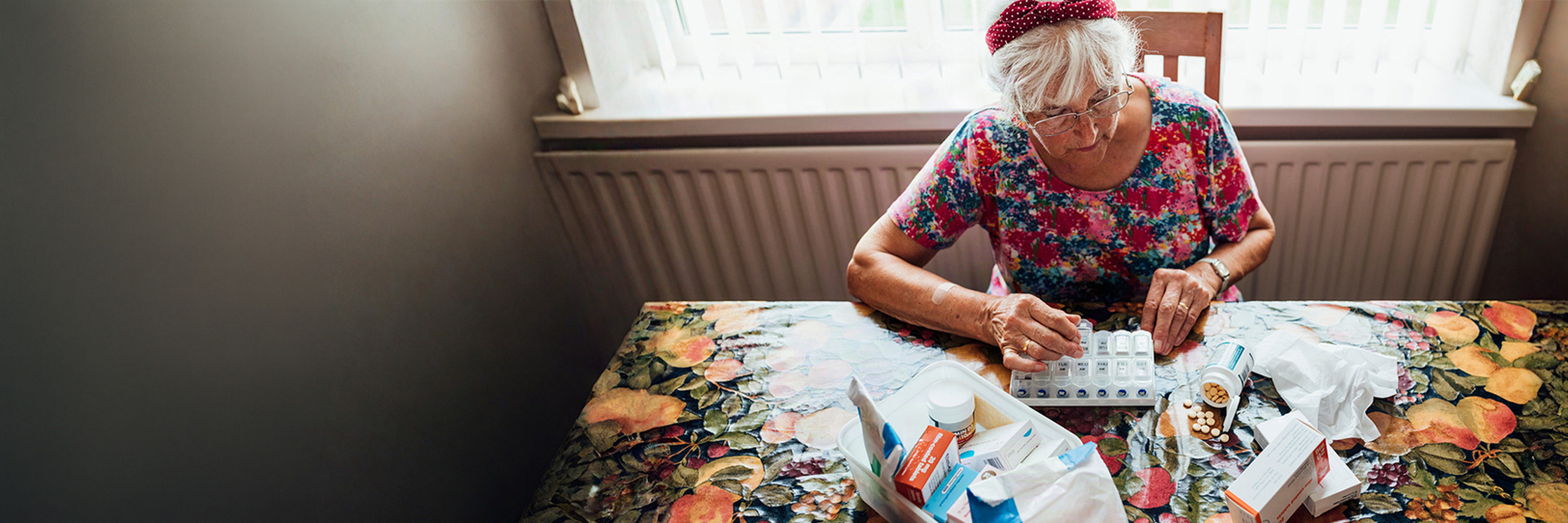
Texas hospital leaders know this cohort: Medicare patients discharged home without skilled nursing or home health. They are “home alone” in an operational sense, whether or not someone lives with them. Many leave with a medication list, a follow-up plan and chronic conditions that do not pause for discharge.
The hospital may have delivered excellent inpatient care. The problem starts when the patient crosses the front door, and the 30-day clock keeps running.
Technology is part of the answer, but the gap is often ownership and capacity. Someone has to make the call, reconcile medications, secure follow-up, notice when a reading or symptom is moving in the wrong direction, and return useful information to the clinicians who share responsibility.
Someone needs to own that work.
Human Relationships, Supported by Technology
Buddy put it simply: “That’s our unique value proposition: the relationship our care navigators and patient-facing team have.”
That relationship is what technology should strengthen. A dedicated care navigator checks whether the patient filled the prescription, has transportation, understands the plan, can reach a primary care physician, or is quietly getting worse. Technology organizes the information and surfaces what needs attention. A care navigator calls the patient. Licensed clinicians review what requires clinical judgment, and escalation paths are designed around the hospital’s care team.
For the patient, the experience should be simple: one person who knows their name and follows through.
In an observational cohort of 145 patients with RPM and CCM at a Texas-based health system, 89% were age 65 or older, and the measured 30-day readmission rate was 14.8%, lower than the 19% CMS benchmark as of October 2025. The cohort was weighted toward COPD and CHF. This was a benchmark comparison, not a controlled study or guarantee, but it shows the model operating in a high-risk Medicare population.
What a Hospital Can Do Monday
Start with the Medicare discharge list. Identify patients going home without skilled nursing or home health services. Make the two-business-day call to a named owner. Schedule the follow-up before the patient leaves. Decide how information gathered between visits gets back to the physicians, nurses and care managers who need it. Then watch where the work slips.
When it slips, the gap is rarely visibility alone. It is accountable capacity: the people, workflows and clinical support required to follow through.
Every hospital starts from a different place. Some have strong discharge and care-management teams but need more capacity for one population. Others need help establishing the workflow. We start by understanding where patients fall through the cracks, what the existing team already owns and where additional people, technology, or clinical support would make the biggest difference.
That can mean strengthening an existing program, supporting a focused transition-of-care population, or building a broader approach to TCM, RPM and CCM. The goal is to find the model that fits the hospital, its clinicians and the community it serves.
My father and I came to the same conclusion from opposite ends of the care journey: technology only matters when it helps one person show up for another. For Texas hospitals, that means reliable capacity to follow the patient home.
If that gap is on your team’s list, I would value comparing notes on one cohort: who is going home without formal support, what your team already owns and where additional capacity could help.
CareAtlas is a founder-led care-management company helping hospitals extend human support between visits.
Related articles from The Scope

THA’s Session in Review: 2023 Outcomes for Texas Hospitals
For 140 days, the Texas Hospital Association spoke out, dug…
The THA 10: Highlighting Legislation Most Important to Texas Hospitals
About midway through the 2023 session of the Texas Legislature,…
Medicaid Enrollees: How to Keep Your Coverage
Texas HHSC needs Medicaid enrollees’ updated information before the state…
The Latest on Medicaid Coverage and the COVID-19 Public Health Emergency
The federal COVID-19 public health emergency (PHE), active since late…

Work to Do in Washington: THA’s Federal Priorities
Earlier this month, the Texas Legislature gaveled in its 88th…
The Texas Legislature Convenes: THA’s Priorities for a Great 88
Every two years, Texas hospitals get less than five months…