
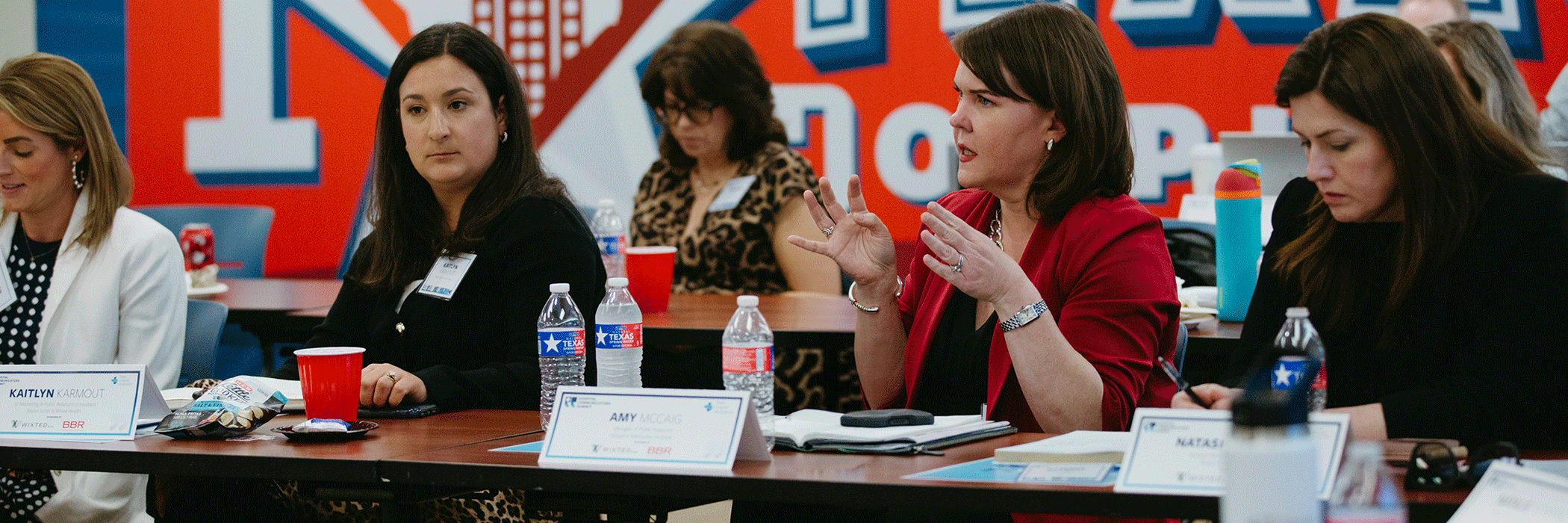
Hospital communications are evolving, driven by shifts in technology, expectations and budgets. Attendees at the 2026 Texas Hospital Communicators Summit received a valuable glimpse of where things are headed from some of the state’s best and brightest minds in media, news, social influence and academia. What rose to the surface were five distinct areas to hone that can help hospitals do more with less, build authentic relationships and measure what truly matters, all while harnessing AI responsibly.
Digital Marketing: Back to Basics
The relentless pressure to grow impact even as budgets and teams remain unchanged or even shrink is a challenge that Austin PBS knows all too well. Thankfully, digital marketing opportunities and insight pathways are expanding so communications teams can do more with less, Carolyn Connolly, chief marketing officer at Austin PBS and Austin City Limits®, shared with attendees.
To stretch limited resources, Connolly leans on what McKinsey & Company calls “effective creativity,” a disciplined test-and-learn loop that uses data to fuel ideas and, ultimately, drive growth. She noted that hospital and media organizations alike struggle with fragmented data, but argued you can still make progress if you “start small, get scrappy” and put focus back on your audience.
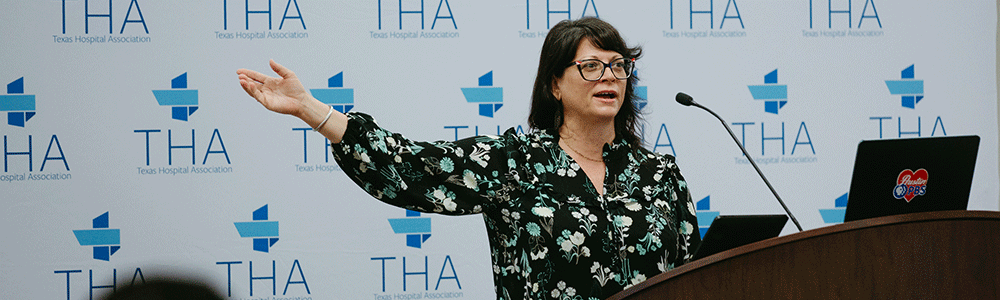
“That one data point, knowing who they are, understanding the market that you’re in,” is always the best place to start — or restart — she said. “There’s always going to be something changing, and we always have to be thinking about, ‘How are we going to problem solve with that?’” Your audience, she promised, remains your most reliable asset. Create a hypothesis based on your data and experiment. “You either get validation [from your audience] that it worked or it didn’t. And then you iterate on it.”
Social Media and Content Creation
A panel of young lifestyle, policy and health care influencers focused on video shorts and reels as valuable considerations for health care communicators. A favorite social media platform right now: Instagram. With TikTok becoming less reliable for creators, several on the panel said they increasingly use Instagram not only for content creation, but also for consuming lifestyle and health-related content.
What keeps them watching is a relatable, trusted source; a clear topic in the first three to five seconds, onscreen headlines and subtitles, and captions (so viewers can watch on mute at work or on the go). These factors can also increase the likelihood viewers will perform two actions the algorithm loves: saving the content to watch later and/or sharing it with someone else.
The content itself can be presented in many ways, but don’t confuse social content with a medical lecture. “My generation hates getting preached at,” said 22-year-old digital content creator Jared Shult. Instead, he recommended, offer “breadcrumbs” of information, with the most entertaining or basic content first. And then trust that “they will get there. They want to hear about something and then research it on their own.”
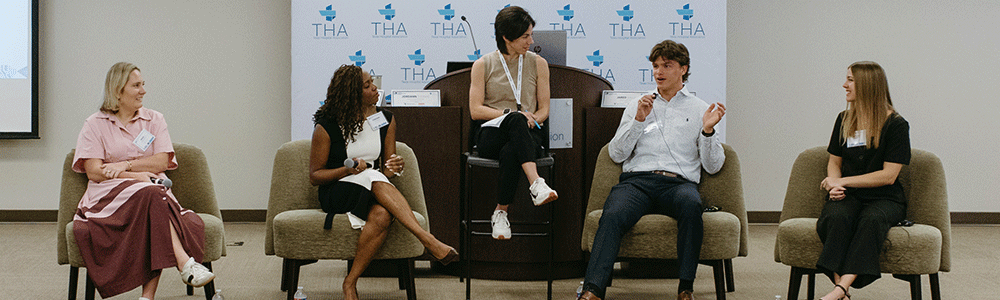
The panel’s recommended division of labor is clear: Social posts should normalize behaviors, spark curiosity and feel deeply relatable, while the organization’s website should serve as the authoritative reference for more evergreen, factual information. In practice, that means ensuring that when news breaks or a hot-button topic is raised, social content links to a highly vetted web page that calmly and clearly lays out “the facts.”
Panelists also framed Substack as a growing space for deeper thinking and more nuanced discussion – something hospital communicators could “capitalize upon” for longer-form perspective, said Brooke Thadeus, health care influencer at Healthadminlife LLC. Thadeus told attendees the opportunities on the platform are “huge” and that, “surprisingly, young people are turning to [Substack] for advice.”
Influencer Relations
When the panel turned to influencer relations, the advice for hospitals was unequivocal: If you are going to partner with influencers, you must give them creative freedom.
Influencer campaigns perform best, they said, when hospitals provide the goal and guardrails (e.g., promoting colonoscopies to younger adults) and then ask, “How do you think you could get this out to your audience and have them receive it well?” What the influencer comes up with might be humorous or irreverent, but don’t discount their ideas just because they’re outside the box.
And when it comes to influencer relations, don’t think about it in social media terms only. On a separate panel, Austin Current’s Joel Gross told attendees to consider podcasting, newsletters and Substack as influencer markets. For example, “podcasts are not streaming radio. I would say it’s way closer to influencer marketing,” he said.
Measuring What Matters
Our digital-first news media panelists see the future of metrics as less about chasing sheer volume and more about proving meaningful influence. “We have a very small audience that we target, and we have ways of tracking if they’re actually listening and watching the episodes, and they are, and they do regularly,” said Bradley Swail of the Texas Talks Podcast.
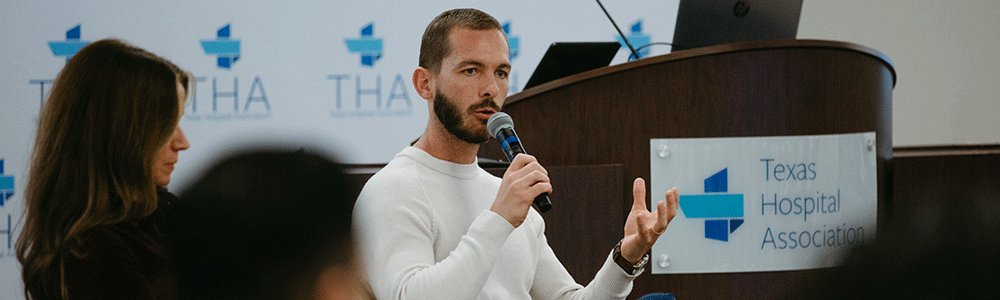
“We look at newsletter subscribers, of course, [but] interactions, I think, are a big thing,” added Eva Ruth Moravec, executive producer at City Cast Austin. “We’re trying to build more of a community…and help people feel more connected.”
“I think it’s easy to get lost in so many metrics,” added Gross, who recalled when impressions meant everything to marketing teams. But now with so many ways to measure and so many endless analytics dashboards, it’s important not to “lose the forest for the trees” and to focus on, simply, “Did that produce the outcome that you were hoping for?”
Responsible AI
There is no discussion around the future of health care communications without including artificial intelligence (AI). Michael Mackert, PhD, director of the Center for Health Communication at the University of Texas at Austin, told attendees that AI utilization is less about flashy tools and more about training real people to use them safely and effectively.
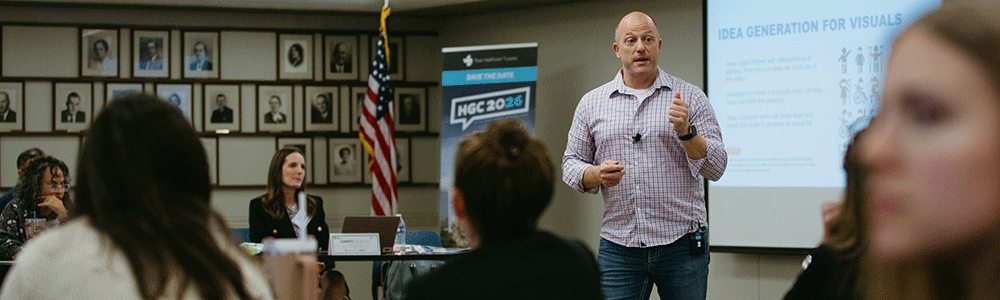
He stressed that large language models (LLMs) are powerful but deeply shaped by their training data, which means they can sound authoritative while being wrong, outdated or biased — like confidently offering medical advice that no longer matches current guidelines or being unable to tailor messages to specific audiences appropriately because, somewhere along the line, policies and guardrails were set up for potentially unrelated reasons. Because of this, AI can act as a copilot for tasks such as brainstorming messages, simplifying clinical language, generating personas, drafting ideas for visuals and suggesting alternative frameworks. Still, there will always need to be “an actual human between the AI and whatever people are seeing.”
Related articles from The Scope
2026 Newsmakers in Texas Hospitals
THA’s Newsmakers are hospital executives and leaders from THA-member hospitals…
Texas Hospital Leaders Connect, Collaborate and Prepare for What’s Next
Texas hospital and healthcare leaders gathered in Fort Worth Sept.…

Celebrating Hispanic Leaders in Texas Hospitals
National Hispanic Heritage Month is observed from Sept. 15-Oct. 15…

How Will Healthcare Show Up on the Ballot in Texas Midterms?
With the midterm elections gearing up and critical deadlines approaching,…

THA’s 2026 Leadership Fellows Class Tackles Texas Healthcare Workforce and Access
Strong hospitals depend on strong leaders — not only to…
How the THA Leadership Fellows Program Prepares Texas Hospital Leaders
The THA Leadership Fellows program brings together Texas hospital leaders…