
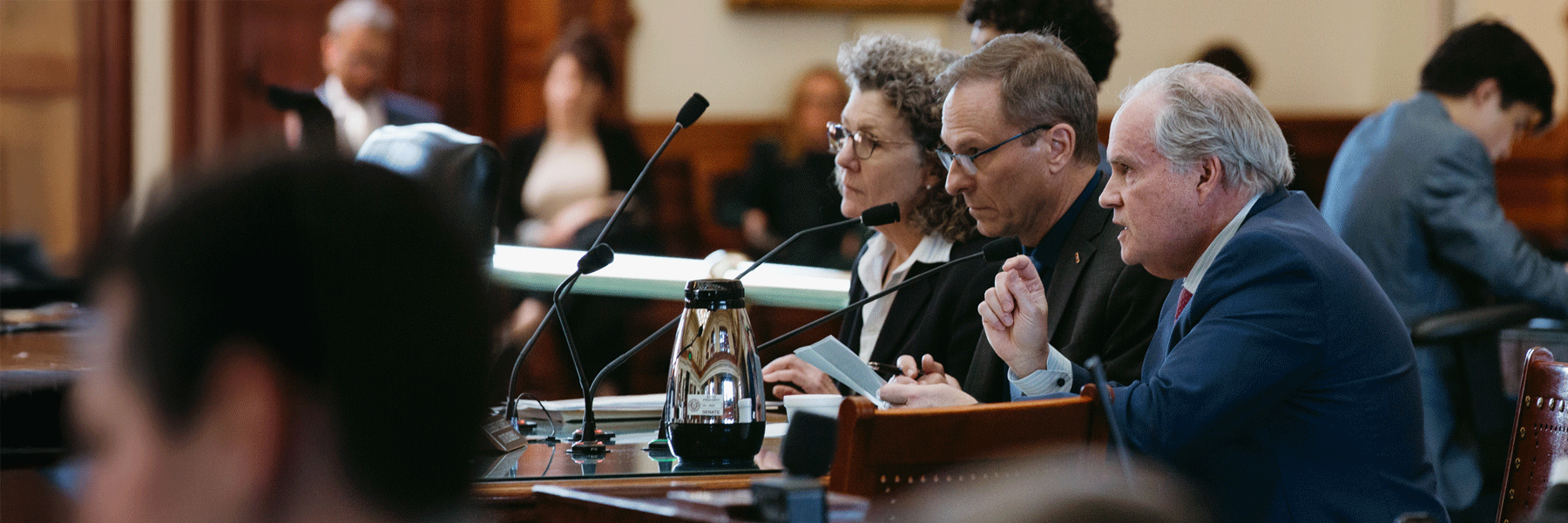
During the special session of the Texas Legislature that just wrapped up, we at the Texas Hospital Association once again had to focus on one of our highest-level – and highest-priority – points that we repeatedly come back to with lawmakers. That perennial message is this:

Hospitals are unique, and so are their circumstances. A one-size-fits-all mandate or prohibition in our state – whether driven by politics or by anything else – must often either exempt hospitals and clinics or include special considerations for those circumstances. Otherwise, the health of our state may suffer.
That theme was at the center of THA’s input on several key measures that lawmakers passed and debated during the governor’s second called session of 2025. Overall, we had success getting that message across – which was fortunate, because the stakes were high.
Let’s start with the state’s new ban on the manufacture, importation, distribution or prescription of abortion-inducing drugs, ushered into law during this special session as House Bill 7. To many, the fact that abortion is generally prohibited in Texas might make HB 7 seem like a natural outgrowth of the post-Roe v. Wade legal framework of our state. But that’s not the whole story. While hospitals do not perform elective abortions, drugs that would likely be classified as “abortion-inducing” under this ban, such as misoprostol, are used for many other legitimate gynecological purposes, such as treating postpartum hemorrhage. Simply put, hospitals need access to these medications. We stressed this in our advocacy, leading to a blanket exemption for hospitals from HB 7 that allows our facilities to continue providing prudent treatment and saving lives.
Unfortunately, we faced greater challenges in our effort to exempt public hospitals from the final language of Senate Bill 8, which mandates separating “multiple-occupancy private space[s]” – such as bathrooms and changing rooms – by biological sex. THA’s interest in this so-called “bathroom bill” was tied not to the continuously hot-button political implications over gender, but to the realities of delivering patient care in emergency departments, clinical training spaces and other care settings where patients are separated by privacy curtains. We emphasized that segregating patients by sex in these areas is an unreasonable burden for Texas’ health care establishments, whose mission – above any other considerations – is to deliver needed and timely patient care.
Lawmakers ultimately did not grant health care facilities an exemption from SB 8. However, the bill’s author, Sen. Mayes Middleton (R-Galveston), delivered a key statement of legislative intent on the Senate floor the day the bill passed. Sen. Middleton told the chamber that he believes hospital EDs and other clinical spaces do not qualify as multiple-occupancy private spaces under the bill – thus, SB 8 would not affect them. Statements of intent aren’t binding with respect to the language and enforcement of the bill, and this one doesn’t provide a definitive word on the legal reach of SB 8. But that clarification from the author will give us something to work with as we pursue a more concrete exemption for hospitals in the future.
The lessons we teach on hospitals’ unique needs continued – and strongly resonated – with the outright defeat of House Bill 46. This bill sought to limit expenditures by political subdivisions, which includes our public hospitals that need flexibility on expenses such as hospital workforce and medical supplies. More importantly, limiting public hospital expenditures could upend key intergovernmental transfer arrangements, such as the payments that these hospitals make to unlock federal supplemental dollars for all hospitals providing care for Medicaid patients in Texas. That would have potentially cost our state billions of dollars. THA testified in committee about the forces outside of hospitals’ control – such as drug and workforce shortages – that can quickly change a hospital’s revenue outlook and necessitate that expenditure flexibility. Fortunately, HB 46 never made it out of committee, showing that we found receptive ears.
No matter what happens at the Capitol – whether in a regular session, interim activities or in special sessions – the need to adjust for our facilities’ singular circumstances will always be one of our top-line tenets. Hospitals are houses of healing, and when politics threaten to compromise their ability to undertake that mission, we’ll always be ready to keep that from happening.
Related articles from The Scope

Planting the Seeds for 2027: Stay Engaged in the Interim
At Austin’s most well-known building, plenty of important work happens…

Resilience, Results and Readiness: Extending 2025’s Impact for Texas Hospitals
For the Texas Hospital Association and hospitals across Texas, 2025…
The Importance of the Interim
What’s an Interim Session? The Texas Legislature meets in regular…

COVID-19 Heroes Day: Honoring Sacrifice
Updated Feb. 4, 2026. (Originally published Feb. 2024.) For health…

Tested at Every Turn: A Look Back at THA’s Action-Packed Year
After this year’s regular session of the Texas Legislature adjourned…

Keep Texans Insured – for Everyone’s Health
With no deal to extend federal tax credits, up to…