

💡 What’s Happening?
The shortage of healthcare workers has been on Texas’ radar for years now; although the healthcare workforce has grown dramatically over the last several years, demand continues to outpace supply. While hospitals work to strengthen employee retention, the healthcare sector – especially hospitals – needs more graduates.
Physician shortages cause long wait times for patients, limited access to specialists and provider burnout. While Texas has plenty of people interested in healthcare careers, training them – especially specialty doctors – takes time, faculty and clinical capacity resources the state doesn’t have enough of. With labor making up more than 50% of a hospital’s costs, access to an adequate and trained workforce is a key way to reduce strain and lower healthcare costs for everyone.
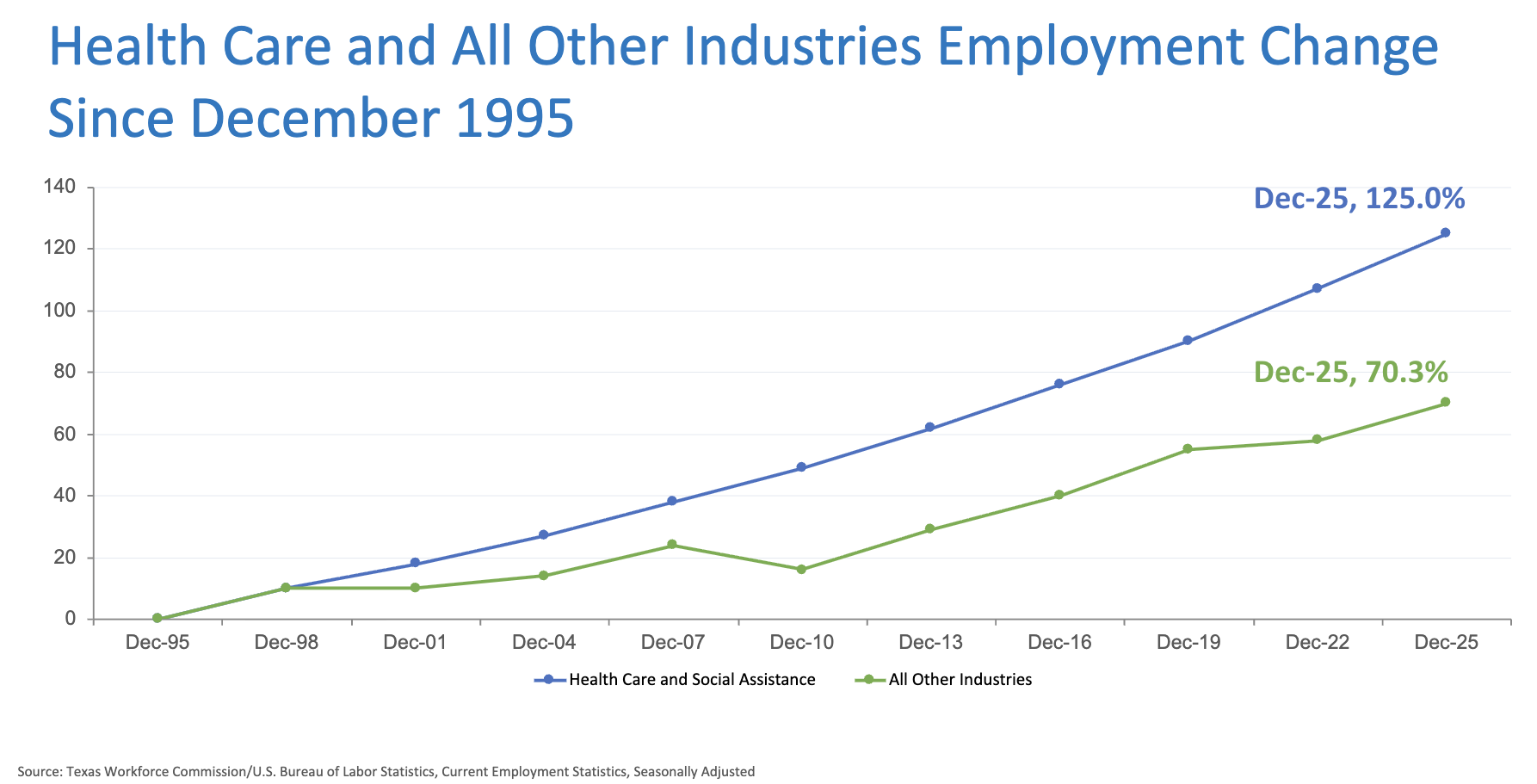
“Nearly 1.4 million Texans are employed in health care occupations. But, [the director of labor market information at the Texas Workforce Commission] said in many regions in the state only about 30 to 50% of health care employers’ needs are being met, while in other regions as little as 25% of the need is met.”
KERA News: Texas’ health care workforce has increased 123% in 30 years. State officials say it isn’t enough
🚧 The Pipeline Problem
Medical school enrollment has grown, but becoming a physician requires years of additional residency training through graduate medical education (GME). That’s where many future physicians come across a bottleneck.
A key challenge is the federal cap on Medicare-funded residency positions which has largely remained unchanged since 1997, limiting growth in training capacity nationwide. Considering the financial limitations, medical schools must compete for clinical training sites, faculty physicians and other resources needed to educate future doctors, forcing admissions to reduce offers or turn away qualified candidates.
Texas has made progress through past investment of its own resources to expand residency opportunities and maintain its goal of having more first-year residency positions than medical school graduates. These investments come with a special condition: the types of available slots are restricted. Candidates assigned to a specific slot, say primary care, are limited to that option, even if the need is concentrated in another specialty like obstetrics. The GME cap is in need of federal update and state reconsideration to alleviate its impact on graduating professionals and the medical workforce at large.
“[An additional $71 million] was needed to support the residency positions created through the state’s expansion grant program since 2014 and also maintain the state’s target ratio of 1.1 entry-level residency position for every medical school graduate in the state, says Ms. Collins.
For instance, given the projected 2,350 Texas medical school graduates in 2026, it will take 2,585 GME positions to maintain that target ratio of residents to graduates, Ms. Collins said. In 2027, there will be a projected 2,380 medical school graduates, requiring 2,618 GME positions to stay at 1.1 to 1.”
Texas Medical Association: ‘Grow Your Own’: Lawmakers Continue to Invest in Medical Education to Expand Workforce
“Solving the doctor shortage in the U.S. will take more than just increasing the number of spots available in medical school, says Dr. Amy Waer, dean of Texas A&M University’s School of Medicine. …‘While many medical schools would like to increase their admission numbers, finding appropriate clinical training sites and physician faculty are limiting factors, particularly for community-based medical schools like Texas A&M,’ Waer wrote in an email.”
U.S. News: Why It’s Still Hard to Get Into Medical School Despite a Doctor Shortage
👥 It Takes a Team
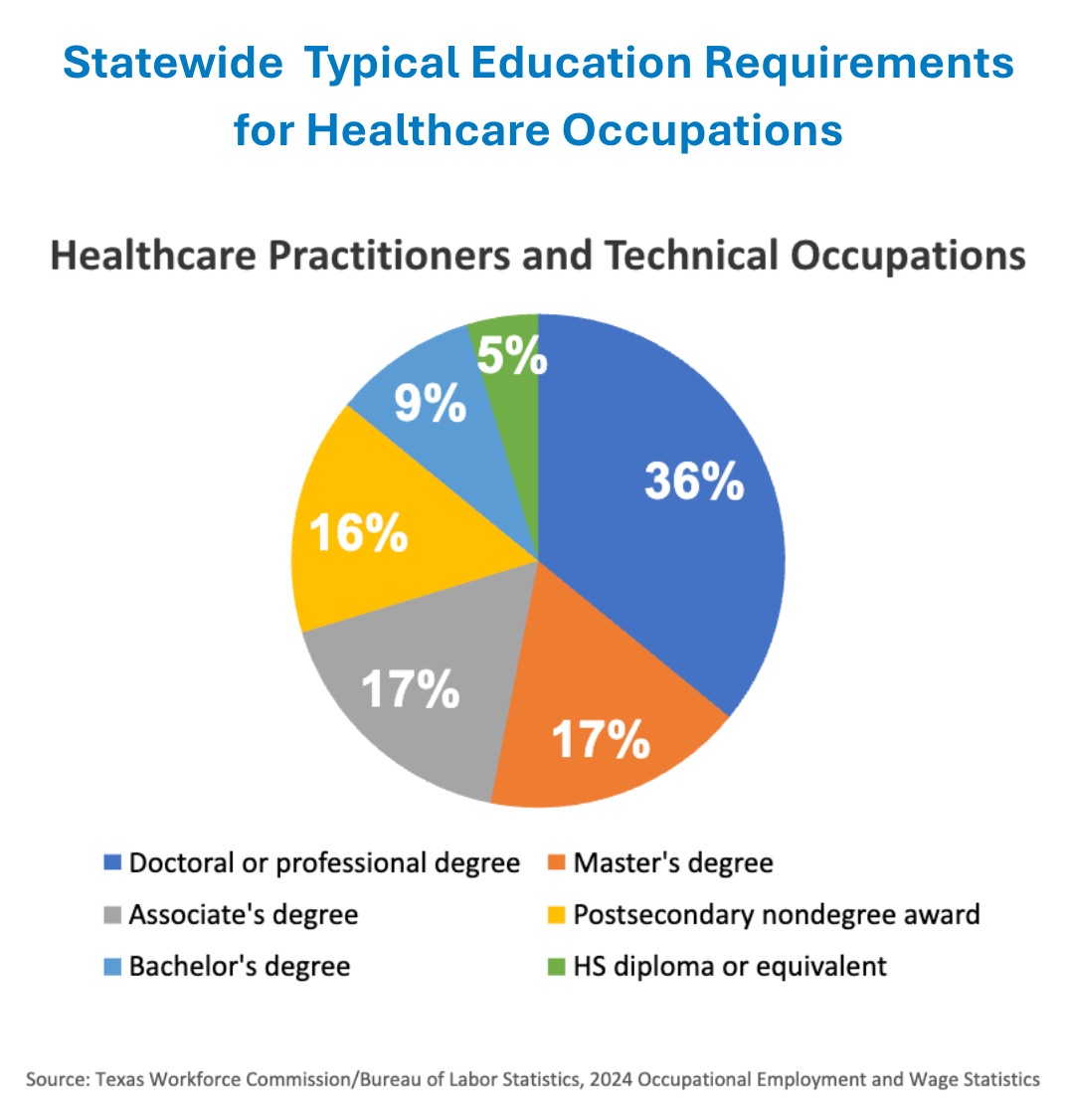
Physicians may be the most visible in the workforce shortage, but modern healthcare depends on an entire team of highly trained professionals. Nurses, pharmacists, respiratory therapists, laboratory and radiology technicians, physical and occupational therapists, behavioral health specialists and many others all play critical roles in patient care.
When shortages emerge in any one of these professions, the effects can ripple throughout the healthcare system. Like physicians, most require specialized education, faculty support and clinical training opportunities before entering the workforce.
🌱 Investing in People
Expanding healthcare education does more than fill vacancies. Every residency slot, clinical training site and faculty position creates jobs, supports local economies and helps communities retain talent.
Healthcare professionals often establish roots where they train. When Texas invests in training capacity, it is not only strengthening access to care – it is creating economic opportunities, supporting local employers and building a workforce that can serve growing communities for decades to come.
A healthy workforce controls healthcare costs by providing expanded and timely access to care, avoiding expensive temporary contract employment, and creating economic growth in communities.
⭐ Texas doesn’t have a shortage of people interested in healthcare careers. It has a shortage of training capacity and clinical placements needed to turn that interest into a workforce.
📖 Learn More
Graduate Medical Education
Two Texas Hospitals Prepare the Next Generation of Health Care Workers
