

The federal 340B Drug Pricing Program requires pharmaceutical manufacturers to supply covered outpatient drugs at a discount to qualifying health care entities that serve at-risk populations such as low-income and uninsured/underinsured patients, critical access hospitals, many rural hospitals, and public and nonprofit disproportionate share hospitals. For-profit hospitals are prohibited from the program.
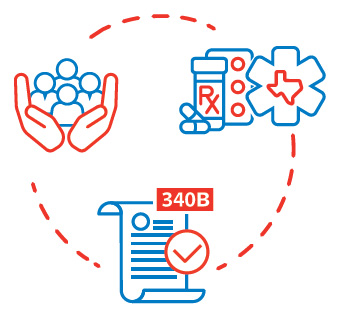
Hospitals use the resulting savings to stretch their public funding and offer a host of health care services in their communities. This makes the 340B program a key cog in the effort to serve low-income and indigent patients. But threats to 340B’s effectiveness loom at both the state and federal levels as drug manufacturers take action to undermine the program. The Texas Hospital Association supports a robust 340B program and opposes all efforts to weaken it and Texas’ health care safety net.
Key Facts on 340B:
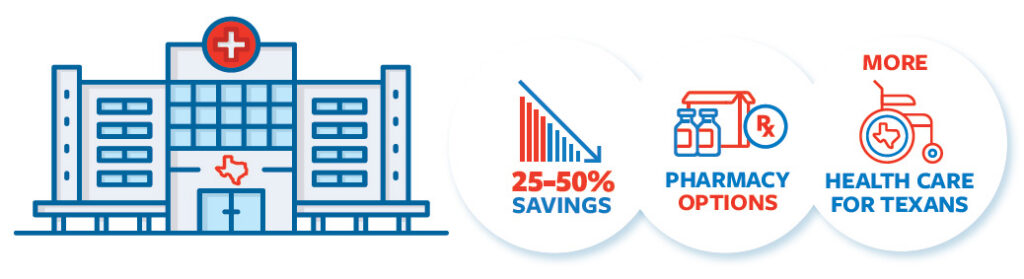
Participating hospitals/other entities can achieve average savings of 25-50%, according to the Health Resources Services Administration (HRSA), the federal agency that administers 340B.
- Participating hospitals use the savings to provide such services as free care for the uninsured, community health programs, and free immunizations.
- Participating hospitals can deliver 340B outpatient drugs through either an in-house pharmacy or through a contracted community pharmacy approved by HRSA.
340B provides Texas Hospitals:
THA supports preservation of the 340B program through the following actions at the state and federal levels:
State:
Prohibit drugmaker restrictions on contract pharmacies’ participation in 340B – Recently, drugmakers have implemented policies excluding or limiting participating hospitals’ ability to use contract pharmacies to distribute outpatient prescriptions to eligible patients. THA supports a prohibition on such manufacturer-initiated restrictions.
- Restricting the ability to use contract pharmacies means both reduced patientaccess to these necessary medications and reduced operating funds forTexas hospitals, which instead go back into the pockets of pharmaceuticalmanufacturers.
- Over 30 states have statutes protecting federally eligible hospitals’ access to the 340B program. These laws ensure that aggressive pharmaceutical manufacturer policies or legislation do not disrupt this important program from delivering positive health outcomes to populations in need.
- State-level restrictions on 340B will disadvantage Texans and Texas hospitals,especially as other states take action to protect access.
Federal:
Increase insurer transparency and oppose duplicative reporting mandates on hospitals – Drug manufacturers are advocating for additional, duplicative reporting requirements for participating hospitals.
- HRSA requires hospitals to recertify their 340B eligibility each year, attest to meeting program requirements, participate in extensive HRSA and manufacturer audits, and keep auditable records and inventories of both 340Band non-340B drugs, including when using a contract pharmacy. Additional reporting burdens are not necessary and heighten the barrier to entry or continued participation in 340B.
- Additional transparency requirements for drugmakers would shine a light on the explosive growth in pharmaceutical costs as these manufacturers continue to raise prices of their existing drugs and introduce new ones at record-high prices.
Oppose turning 340B into a rebate or credit program – Pharmaceutical manufacturers are now introducing company policies by which hospitals obtain 340B savings via a rebate or credit, rather than by the required upfront discounts for the drugs. A rebate model for 340B would strain participating hospitals and other health care entities by requiring the use of much-needed funds – ultimately increasing costs for both patients and employers, and essentially causing the opposite effect from the intent of the program.
According to Texas Government Code 305.027, this material may be considered “legislative advertising.” Authorization for its publication is made by John Hawkins, Texas Hospital Association. © 2025 Texas Hospital Association. All Rights Reserved.