

State
Every two years, Texas hospitals get less than five months to convince state lawmakers how to foster a better health care landscape in the Lone Star State. The 2027 session of the Texas Legislature is offering the Texas Hospital Association and its member hospitals their latest opportunity to move health care forward.
For more on THA’s policy priorities and issues affecting hospitals as the 2027 session unfolds, visit THA’s White Papers & Reports webpage.
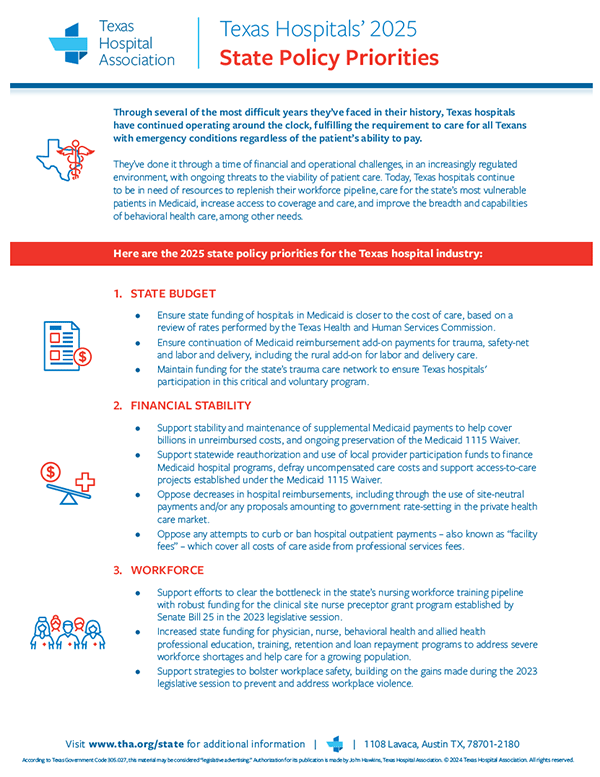
Texas Hospitals’ 2025 State Policy Priorities
Through several of the most difficult years they’ve faced in their history, Texas hospitals have continued operating around the clock, fulfilling the requirement to care for all Texans with emergency conditions regardless of the patient’s ability to pay.
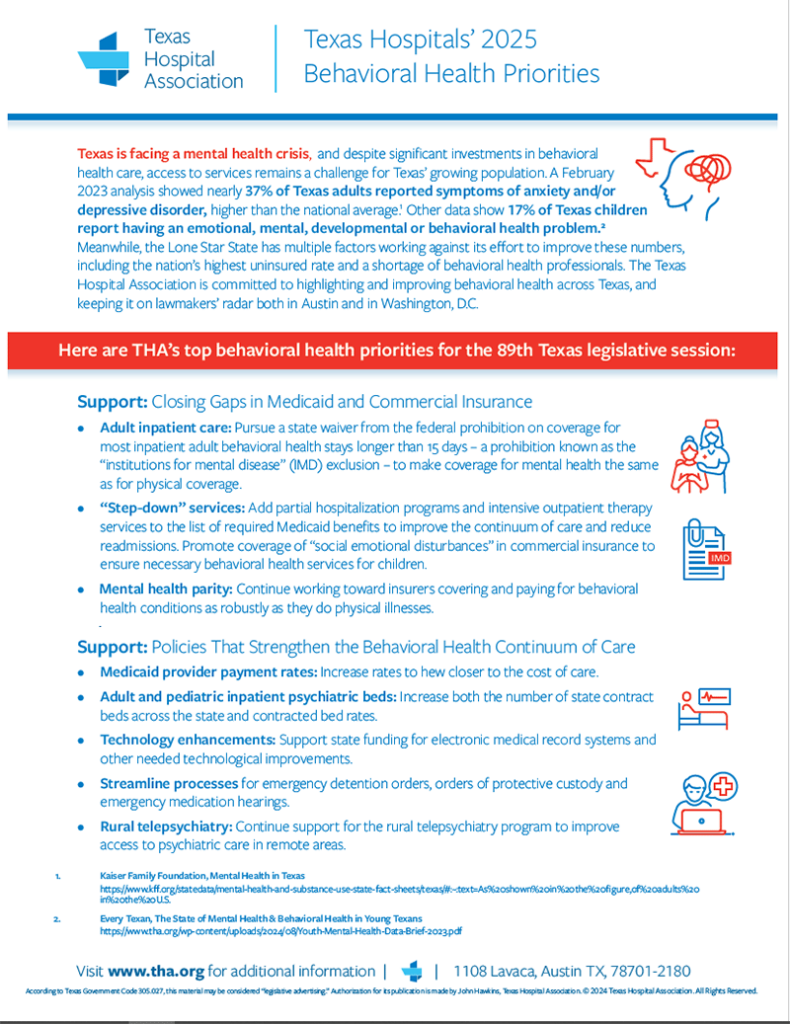
Texas Hospitals’ 2025 Behavioral Health Priorities
Texas is facing a mental health crisis, and despite significant investments in behavioral health care, access to services remains a challenge for Texas’ growing population. A February 2023 analysis showed nearly 37% of Texas adults reported symptoms of anxiety and/or depressive disorder, higher than the national average.
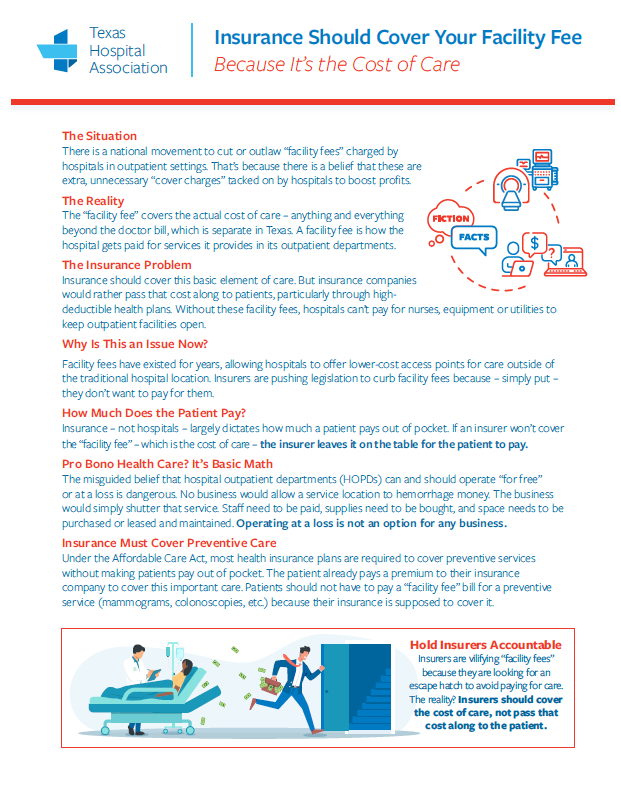
Insurance Should Cover Your Facility Fee
The “facility fee” covers the actual cost of care – anything and everything beyond the doctor bill, which is separate in Texas. A facility fee is how the hospital gets paid for services it provides in its outpatient departments.
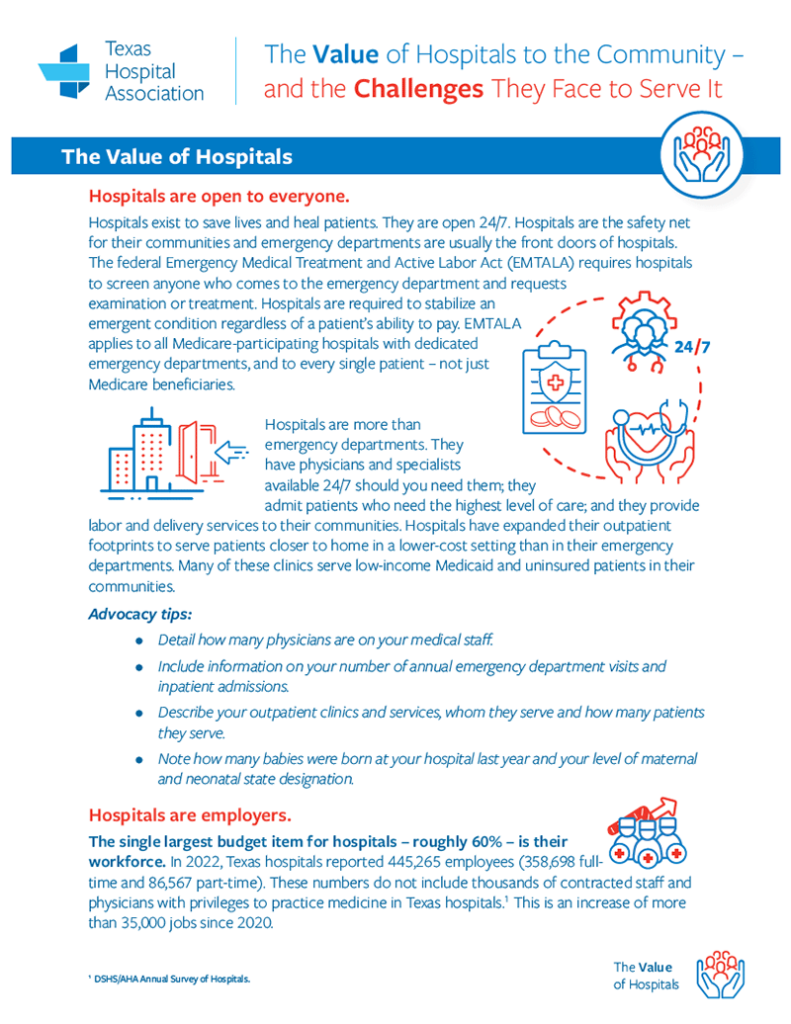
The Value of Hospitals to the Community – and the Challenges They Face to Serve It
Hospitals are open to everyone. Hospitals exist to save lives and heal patients. They are open 24/7. Hospitals are the safety net for their communities and emergency departments are usually the front doors of hospitals.
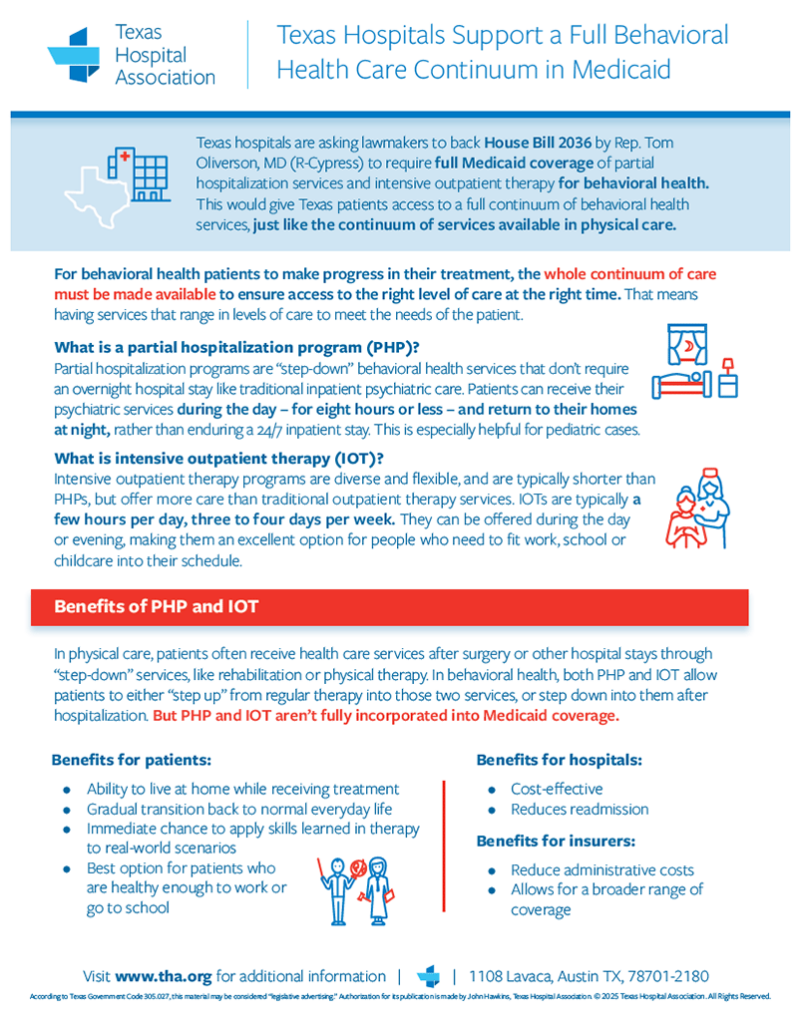
Texas Hospitals Support a Full Behavioral Health Care Continuum in Medicaid
For behavioral health patients to make progress in their treatment, the whole continuum of care must be made available to ensure access to the right level of care at the right time. That means having services that range in levels of care to meet the needs of the patient.
Federal
Now more than ever, Texas hospitals need leaders in Washington, D.C., to advance sound policies that help facilities continue to fulfill their lifesaving mission – and navigate the considerable challenges that come with delivering health care in the modern age.
Budget discussions in the 119th Congress have quickly centered around legislative packages that would result in dramatic cuts to Medicare and Medicaid numbering in the trillions of dollars. At the same time, THA and other hospital advocates are pushing for a repeal of separate cuts to safety-net hospital funding and the continuation of key programs set to expire in early 2025, such as critical payment programs for rural hospitals.
THA will continue working with the 40 members of the Texas congressional delegation to champion policies that protect the health care safety net, preserve states’ ability to obtain ample funding for their Medicaid programs and improve access to care in rural hospitals, among many other policy needs.
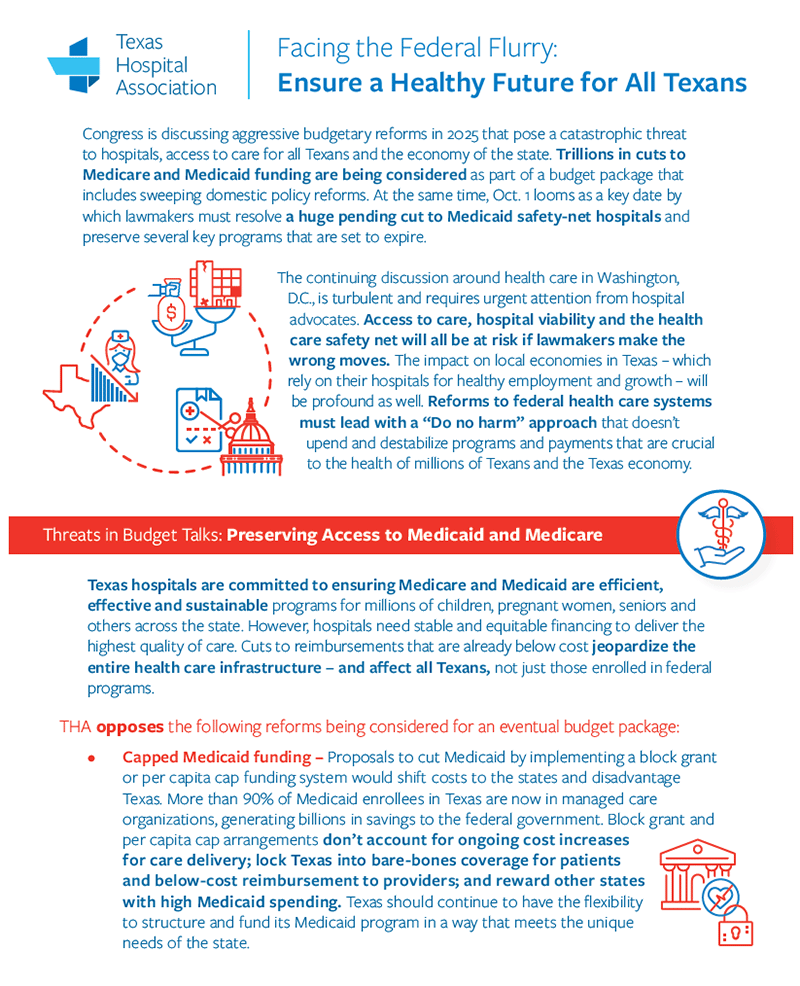
Facing the Federal Flurry: Ensure a Healthy Future for All Texans
Congress is discussing aggressive budgetary reforms in 2025 that pose a catastrophic threat to hospitals, access to care for all Texans and the economy of the state. Trillions in cuts to Medicare and Medicaid funding are being considered as part of a budget package that includes sweeping domestic policy reforms. At the same time, April 1 looms as a key date by which lawmakers must resolve a huge pending cut to Medicaid safety-net hospitals and preserve several key programs that are set to expire.

Proposed Medicaid Cuts Would Have Catastrophic Impact on Texas
Texas operates a lean, cost-effective Medicaid program that saves taxpayers and the federal government billions of dollars. Using a managed care delivery system, provider-financed supplemental payments and strict eligibility requirements, any cuts to an already bare-bones program would have a catastrophic impact on the safety net. According to the Manhattan Institute, Texas has the lowest percentage of Medicaid spending above federal minimums of any state.
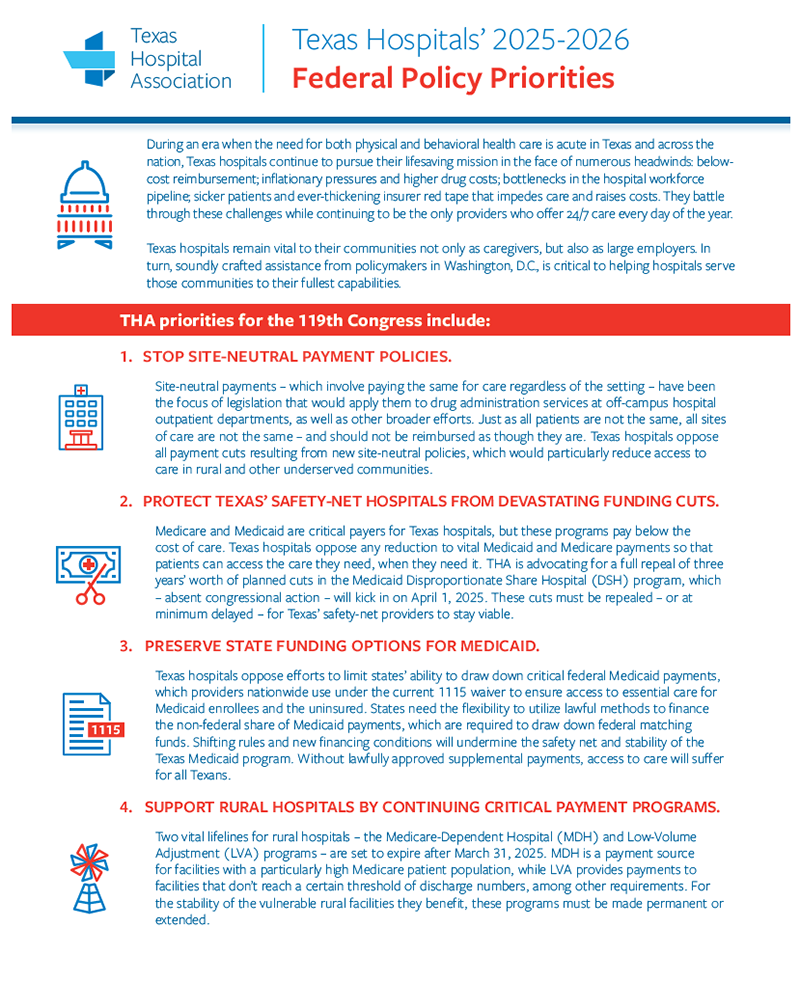
Texas Hospitals’ 2025-2026 Federal Policy Priorities
During an era when the need for both physical and behavioral health care is acute in Texas and across the nation, Texas hospitals continue to pursue their lifesaving mission in the face of numerous headwinds: below cost reimbursement; inflationary pressures and higher drug costs; bottlenecks in the hospital workforce pipeline; sicker patients and ever-thickening insurer red tape that impedes care and raises costs. They battle through these challenges while continuing to be the only providers who offer 24/7 care every day of the year.
Medicare & Medicaid
Get the key information on Medicare and Medicaid, the two government-sponsored programs that provide a significant portion of Texas hospitals’ patient revenue.
Medicaid DSH Cuts
Learn about Texas hospitals’ work to stop harmful reductions to Medicaid Disproportionate Share Hospital payments.
Surprise Billing
Texas hospitals are keeping tabs on state and federal surprise-billing laws enacted in recent years to ensure Texas patients no longer receive surprise medical bills for emergency or unplanned out-of-network health care services.
340B Drug Pricing Program
Through the federal 340B program, pharmaceutical manufacturers sell drugs used in eligible safety net hospitals’ outpatient settings at discounted prices. Texas hospitals are working to make sure 340B remains robust and accessible for providers.
Price Transparency
Responsibility for good health care decision making rests with all of us — hospitals, physicians, insurers, employers and consumers themselves. As with many issues in health care, price transparency is complex and requires engagement of all stakeholders along the continuum of care to ensure meaningful transparency for patients.